1. Introduction
Tata Investment Corporation Limited (TICL) is one of India’s most trusted non-banking financial companies (NBFCs), anchored by the legendary Tata Group ecosystem. As of mid-2026, TICL trades in the ₹6,000–₹7,500 band, making any projection toward 2040 both exciting and analytically demanding.
Table of Contents
Long-term investors targeting 2040 are looking at a potential 14-year wealth-compounding window — one of the most powerful timeframes in equity investing. With India’s GDP projected to hit $7 trillion by 2030 and $10 trillion+ by 2035, Tata Investment stands at a powerful intersection of holding company value and market appreciation.
2. Market Overview
India’s NBFC sector is forecast to grow at a CAGR of 14.2% between 2026 and 2032, driven by financial deepening, digital lending, and rising equity market participation.
Tata Investment’s portfolio spans listed equities, mutual funds, and strategic group holdings, giving it diversified exposure across 25+ Tata Group companies. The Sensex, which crossed 80,000 in 2024, is projected to reach 1,60,000–2,00,000 by 2035, providing a structural tailwind.
| Indicator | 2026 Estimate | 2030 Projection | 2035 Projection | 2040 Projection |
|---|---|---|---|---|
| India GDP (USD Trillion) | $3.8T | $7.0T | $9.5T | $13.0T |
| BSE Sensex (approx.) | 82,000 | 1,20,000 | 1,65,000 | 2,50,000+ |
| NBFC Sector AUM (₹ Lakh Cr) | ₹38 | ₹65 | ₹95 | ₹1,50,000+ Cr |
| Tata Group Market Cap (₹ Lakh Cr) | ₹32 | ₹55 | ₹80 | ₹1,20,000+ Cr |
| TICL Book Value Growth (CAGR) | Base | ~12% | ~13% | ~14% |
3. Key Data Insights
Tata Investment’s net profit grew 38% YoY in FY2025, and its dividend yield consistently hovers between 1.2%–1.8%, making it a dual-return vehicle — capital appreciation plus income.
The stock trades at a 35–45% discount to Net Asset Value (NAV), a persistent feature of holding companies in India. Historically, such discounts compress during bull markets, unlocking significant upside.
| Metric | Value (2026) |
|---|---|
| Current Price Range | ₹6,000–₹7,500 |
| P/E Ratio | ~22x |
| Price-to-Book | ~1.8x |
| Dividend Yield | ~1.4% |
| NAV Discount | ~38–42% |
| 5-Year CAGR (2021–2026) | ~19.5% |
| Portfolio AUM | ~₹12,000 Cr |
Key insight: A 19.5% historical CAGR, if sustained even at a moderated 15% over 14 years, would place TICL at approximately ₹40,000–₹45,000 by 2040.
4. Investment Strategy
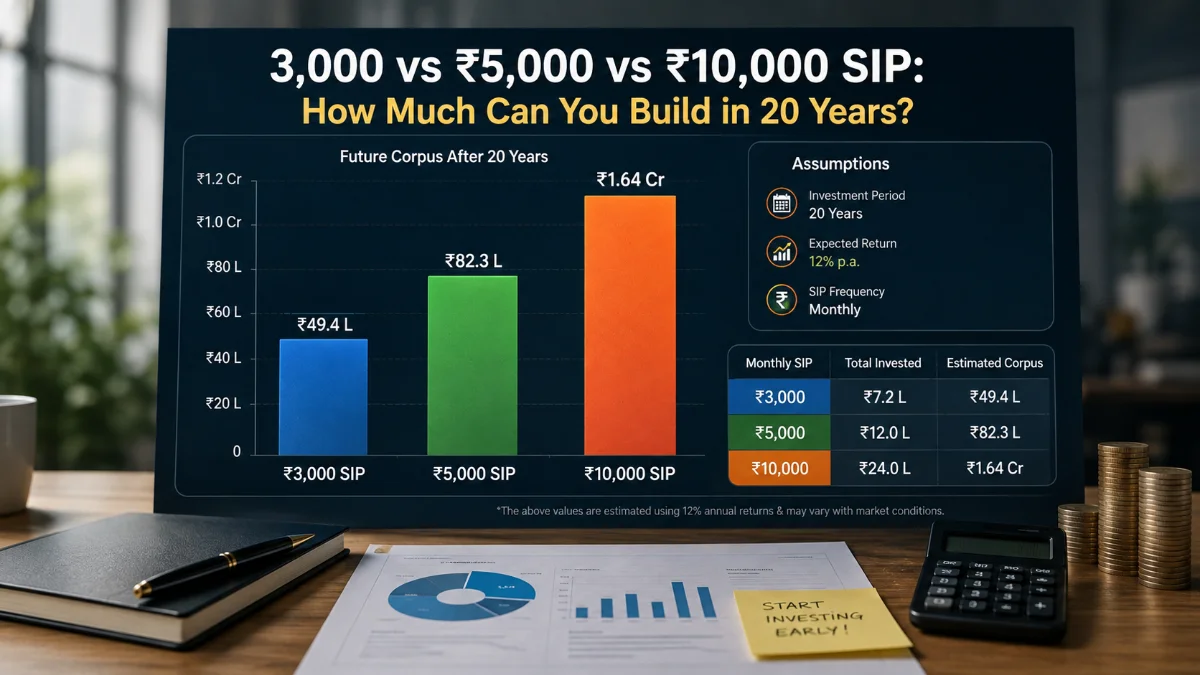
Long-horizon investors should adopt a Systematic Investment Plan (SIP) approach, accumulating TICL shares during market corrections — particularly when the stock dips below 1.5x book value.
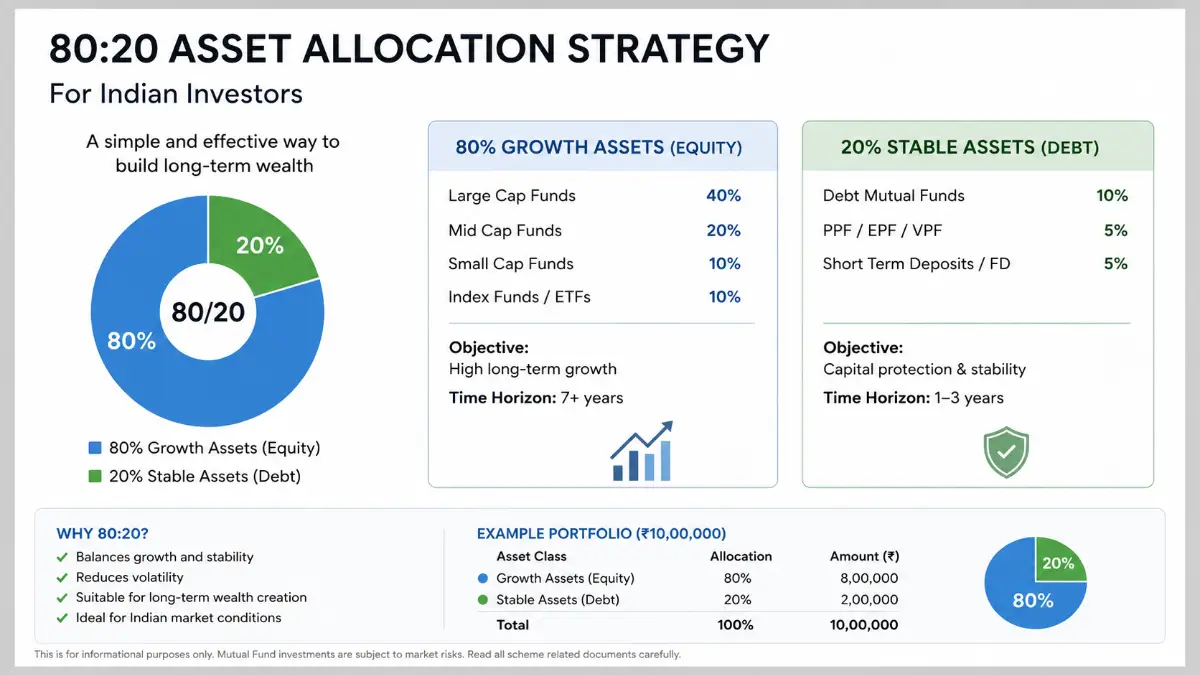
Allocating 5–8% of an equity portfolio to TICL provides Tata Group diversification without buying 30 individual stocks. It functions as a “Tata ETF proxy” with active management.
| Strategy Type | Suggested Allocation | Expected Holding Period | Return Potential |
|---|---|---|---|
| Aggressive Growth | 8–10% of equity portfolio | 10–14 years | 18–22% CAGR |
| Balanced Growth | 5–7% of equity portfolio | 8–12 years | 14–18% CAGR |
| Conservative Income | 3–5% of equity portfolio | 5–8 years | 10–13% CAGR |
| SIP-Based Averaging | ₹5,000–₹20,000/month | 12–15 years | 15–19% CAGR |
Expert tip: Enter during broad market corrections of 15%+ for maximum long-term alpha. TICL has historically recovered 40–60% within 18 months post correction.
5. Tata Investment Share Price Target 2040 – Growth Forecast
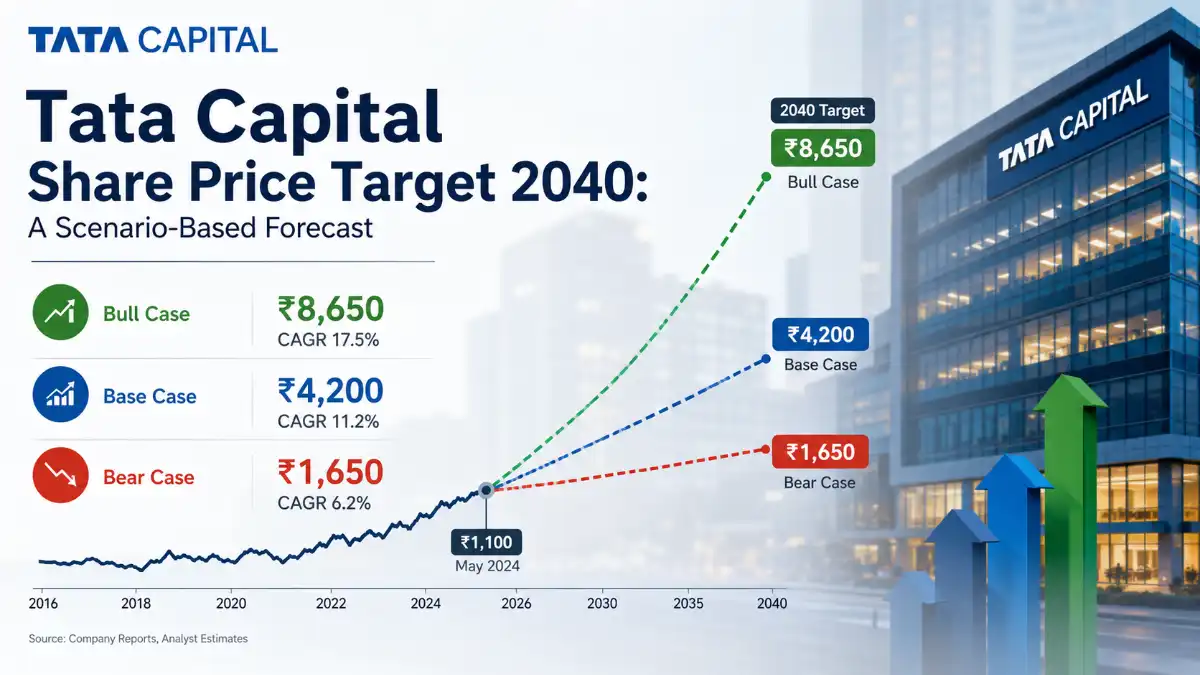
Using three scenarios — bear, base, and bull — based on CAGR modeling from current price levels of ~₹7,000:
| Scenario | Assumed CAGR | Price Target 2030 | Price Target 2035 | Price Target 2040 |
|---|---|---|---|---|
| Bear Case | 10% | ₹12,500 | ₹20,000 | ₹32,000 |
| Base Case | 15% | ₹17,500 | ₹35,000 | ₹70,000 |
| Bull Case | 20% | ₹24,000 | ₹60,000 | ₹1,50,000+ |
| Super Bull (NAV re-rating) | 22–24% | ₹28,000 | ₹75,000 | ₹2,00,000+ |
The base case of ₹70,000 by 2040 represents a 10x return from ₹7,000 — entirely realistic given India’s macro trajectory and Tata Group’s global expansion plans.
Tata Group is investing $90 billion+ in new businesses through 2030 — including semiconductors (Tata Electronics), green energy (Tata Power), EV manufacturing (Tata Motors), and AI/cloud (TCS). TICL’s NAV benefits from every rupee of value created across this ecosystem.
| Tata Group Sector | 2026 Contribution to TICL NAV | Projected 2035 Contribution |
|---|---|---|
| TCS (IT Services) | ~35% | ~28% |
| Tata Motors / EV | ~18% | ~22% |
| Tata Power / Green Energy | ~10% | ~18% |
| Tata Steel | ~12% | ~10% |
| Tata Chemicals & Consumer | ~8% | ~10% |
| New Ventures (Semi, AI) | ~2% | ~12% |
6. Risk Analysis
No long-term investment is without risk. TICL carries specific holding-company risks — primarily the NAV discount widening during prolonged bear markets and regulatory changes in NBFC norms.
| Risk Factor | Probability | Impact | Mitigation |
|---|---|---|---|
| Persistent NAV Discount | Medium (40%) | Moderate | Buy-and-hold; discount compresses in bull cycles |
| NBFC Regulatory Tightening | Low (20%) | High | Tata Group compliance track record is strong |
| Global Recession (2028–2030) | Medium (35%) | High | SIP averaging reduces cost basis |
| Tata Group Portfolio Underperformance | Low (15%) | Very High | Tata’s diversification limits sector-specific risk |
| Currency Risk (USD/INR) | Low-Medium | Low | Primarily domestic exposure |
| Market Liquidity Risk | Low | Low | Listed on NSE/BSE with adequate daily volumes |
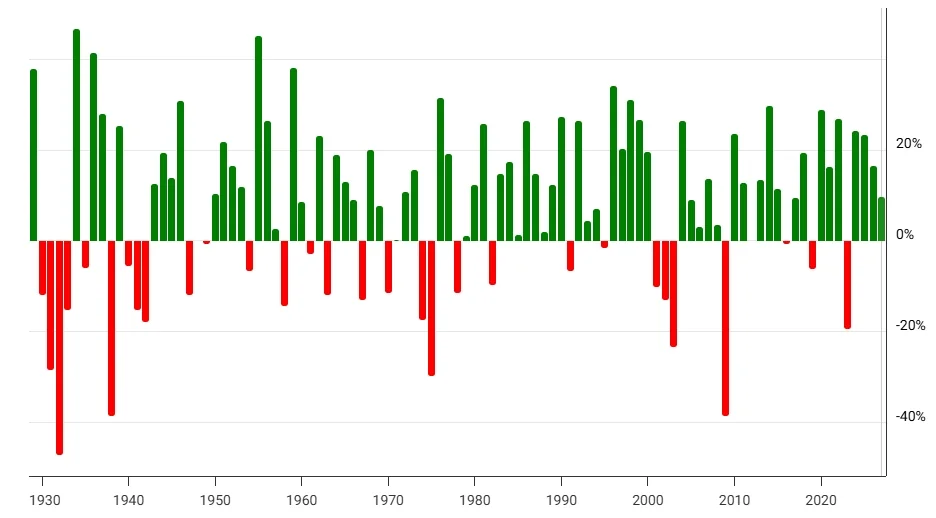
Volatility note: TICL typically shows beta of 1.1–1.3, meaning it amplifies market moves by 10–30%. This is a feature for patient investors, not a bug.
7. Conclusion
Tata Investment Corporation is a rare long-duration compounding vehicle that gives retail investors leveraged exposure to India’s most iconic conglomerate at a structural discount.
The base case share price target for 2040 stands at ₹70,000, representing a ~10x return over 14 years from current levels. The bull case, supported by NAV re-rating and Tata Group’s aggressive expansion, could push targets to ₹1,50,000+.
For investors with a disciplined 14-year horizon, a SIP approach, and risk tolerance for volatility, TICL offers one of the most compelling risk-adjusted opportunities in Indian equity markets today. As India marches toward a $13 trillion economy, Tata Investment is positioned to capture value across every chapter of that journey.
FAQs
Q1. What is the realistic Tata Investment share price target for 2040?
Based on a 15% CAGR (base case), the target is approximately ₹70,000. A bull case with NAV re-rating could push it to ₹1,50,000+.
Q2. Is Tata Investment a good long-term investment for 2040?
Yes. Its diversified Tata Group portfolio, consistent dividend yield of ~1.4%, and India’s structural GDP growth make it a strong long-horizon holding.
Q3. What CAGR can I expect from Tata Investment over 14 years?
Historical CAGR (2021–2026) is ~19.5%. A moderated 15–18% CAGR is a reasonable expectation for the 2026–2040 period.
Q4. What are the biggest risks in investing in TICL for the long term?
The primary risks are NAV discount widening, NBFC regulatory changes, and broad market downturns. Systematic investing mitigates most of these over a 14-year horizon.
Q5. How much should I allocate to Tata Investment in my portfolio?
Financial experts suggest 5–8% of your equity portfolio for balanced growth exposure, with higher allocations (8–10%) for aggressive wealth compounding goals.