

1. Introduction
Achieving a stable monthly income of ₹50,000 has become a necessity rather than a luxury in 2026.
With India expected to sustain an average GDP growth of 6.5% till 2029, retail investors are actively entering financial markets.
There is a clear shift away from traditional low-return instruments toward diversified income-generating assets that outperform inflation.
This guide outlines a strategic roadmap to help you create a reliable passive income portfolio aligned with 2026 market trends.
We explore how combining Systematic Withdrawal Plans (SWPs), REITs, and high-yield corporate debt instruments can help secure long-term financial stability.
2. Market Overview
The financial ecosystem in 2026 is shaped by strong growth expectations, with the Nifty 50 projected to touch 30,000 by March 2027, indicating nearly 17% upside potential.
India’s corporate bond market has expanded to approximately ₹53.6 lakh crore, offering higher-yield opportunities for retail investors.
The RBI repo rate at 5.25% has created a favorable environment for debt investments by balancing yields and price stability.
High-growth sectors such as PropTech (19.48% CAGR) and AI-driven industries are contributing significantly to dividend-based income strategies.
Below is a forward-looking projection of key asset classes up to 2032.
Table 1: India Market Projections (2026–2032)
| Asset Class | 2026 Current Status | 2027 Forecast | 2032 Target | Projected CAGR |
|---|---|---|---|---|
| Nifty 50 Index | ~25,600 | 30,000 | 52,000+ | 12.5% |
| Corporate Bonds | ₹53.6L Cr | ₹60L Cr | ₹110L Cr | 10.8% |
| REITs/InvITs AUM | ₹1.2L Cr | ₹1.5L Cr | ₹4.5L Cr | 21.0% |
| Digital Economy | $800B | $1T | $2.5T | 15.2% |
3. Key Data Insights
To earn ₹6,00,000 per year (₹50,000 monthly), the required investment amount varies depending on the yield of the chosen asset.
In 2026, SWPs from hybrid mutual funds emerge as one of the most efficient income strategies.
Data indicates that Fixed Deposits require around ₹2.30 crore, whereas SWPs can achieve the same income with approximately ₹1.60 crore.
Advanced “ScientificPay” strategies leveraging high-alpha instruments can reduce this requirement further to nearly ₹1.0 crore.
Below is a comparison of capital requirements across different investment approaches.
Table 2: Capital Required for ₹50,000 Monthly Income
| Investment Strategy | Expected Annual Yield | Required Corpus | Efficiency Rating |
|---|---|---|---|
| Fixed Deposits (FD) | 6.5% – 7.0% | ₹2.30 Crore | Low |
| Life Annuity | 6.0% – 6.8% | ₹2.35 Crore | Very Low |
| Systematic Withdrawal (SWP) | 9.0% – 11.0% | ₹1.60 Crore | High |
| High-Yield Bonds/REITs | 12.0% – 14.0% | ₹1.00 Crore | Very High |
4. Investment Strategy
A well-structured portfolio in 2026 should avoid dependence on a single asset class to reduce interest rate and market volatility risks.
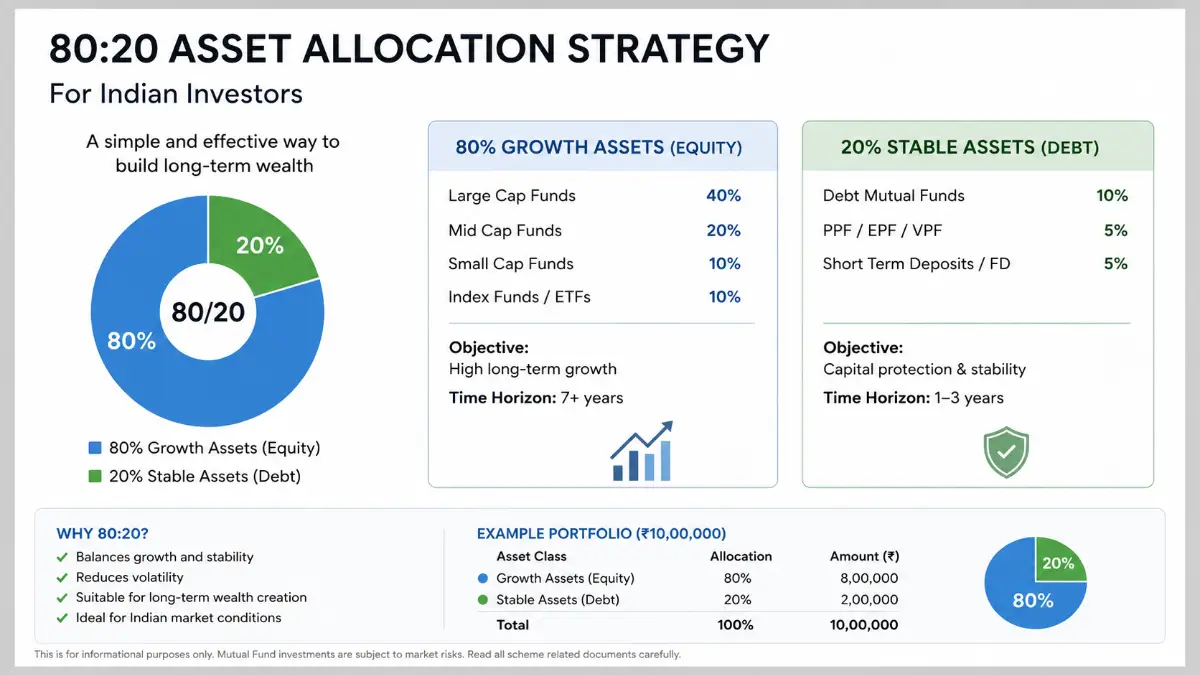
An ideal allocation is 40% Dividend Equities, 30% Corporate Debt, and 30% REITs.
REITs such as Nexus Select (Retail) and Embassy (Office) currently provide distribution yields between 8% and 9%.
Corporate bonds issued by NBFCs like Akara Capital offer returns of up to 14.5% annually, appealing to high-yield investors.
Adding blue-chip dividend stocks like ITC and REC Ltd enhances both steady income and long-term capital appreciation.
Table 3: Top Yielding Assets in 2026
| Asset Name | Type | 2026 Yield (%) | 5Y CAGR (%) | Risk Profile |
|---|---|---|---|---|
| REC Limited | PSU Dividend | 5.15% | 28.04% | Low |
| Nexus Select Trust | Retail REIT | 8.50% | 14.20% | Moderate |
| Brookfield India | Office REIT | 8.20% | 11.50% | Moderate |
| Alpha NBFC Bonds | Corporate Debt | 13.50% | N/A | High |
5. Growth Forecast
The period from 2027 to 2032 is expected to be a golden phase for income-focused investors in India.
PropTech adoption is likely to increase REIT valuations at a rate of 19.48% annually, driven by transparency and efficiency.
Technology and digital infrastructure investments could push the IT sector to $3.56 billion valuation by 2032.
Investors entering in 2026 benefit from both dividend compounding and capital appreciation as markets expand.
Below is a projection of how a ₹1 crore income-focused portfolio may grow over time.
Table 4: Portfolio Growth Forecast (2026–2032)
| Year | Estimated Corpus | Monthly Payout | Cumulative Gains |
|---|---|---|---|
| 2026 | ₹1,00,00,000 | ₹50,000 | ₹6,00,000 |
| 2028 | ₹1,18,00,000 | ₹58,000 | ₹19,50,000 |
| 2030 | ₹1,42,00,000 | ₹70,000 | ₹35,20,000 |
| 2032 | ₹1,75,00,000 | ₹85,000 | ₹58,40,000 |
6. Risk Analysis
High-yield investments in 2026 come with certain risks, especially credit defaults and liquidity constraints.
While AAA-rated bonds provide 7.5%–9.5% returns, higher-yield “Alpha” bonds (14%+) carry significantly greater default risk.
REIT performance depends heavily on occupancy levels, currently ranging between 85% and 95% in major cities.
Inflation remains a critical factor; ₹50,000 today could require nearly ₹72,000 by 2032 to maintain purchasing power.
The table below outlines the risk-reward dynamics of major income-generating assets.
Table 5: 2026 Risk vs. Reward Comparison
| Investment Type | Monthly Income Potential | Volatility Risk | Liquidity |
|---|---|---|---|
| Equity Savings Funds | Moderate | Medium | High |
| Corporate Bonds (BBB) | High | High | Moderate |
| REITs / InvITs | Moderate-High | Low-Medium | High |
| Senior Citizen Savings | Low | Very Low | Low |
7. Conclusion
Building a ₹50,000 monthly passive income in 2026 requires transitioning from simple saving to strategic income planning.
Using SWP strategies with ₹1.6 crore, or high-yield instruments with around ₹1 crore, makes this target achievable.
Focus on sectors with strong structural growth such as renewable energy and tech-driven real estate.
Maintaining diversification is essential to protect against future interest rate cycles and market fluctuations.
Begin your investment journey now to benefit from India’s projected rise toward a $5 trillion economy.
Frequently Asked Questions
1. Can ₹50,000 monthly income be generated with ₹50 lakh in 2026?
To achieve ₹50,000 monthly (12% annual return) with ₹50 lakh, you would need high-risk investments like aggressive corporate bonds or small-cap dividend stocks, which are not ideal for stable income.
2. Which is better for monthly income: REITs or Fixed Deposits?
REITs are more attractive in 2026, offering 8–9% yields plus capital appreciation, while FDs provide only 6.5–7% returns and are fully taxable.
3. How does the 2026 RBI repo rate impact income generation?
At 5.25%, the repo rate has stabilized bond yields while lowering FD returns, making long-term corporate bonds more appealing for locking in higher yields.
4. What is the safest way to earn ₹50,000 per month?
The safest approach is an SWP from a diversified portfolio of large-cap mutual funds and AAA-rated bonds, requiring roughly ₹1.6–₹2 crore.
5. Will income increase over time with these investments?
Yes, investments in dividend stocks and growth-oriented REITs typically grow payouts by 5–7% annually, helping offset inflation.






2 thoughts on “Generate ₹50,000 Monthly Income: Smart Investment Strategies”