

Quick Answer: A well-structured crypto portfolio for long-term wealth uses a core-satellite approach — allocate 60–70% to Bitcoin (BTC) and Ethereum (ETH) as your core, 20–30% to large-cap altcoins with real utility (SOL, LINK, AVAX), and keep 10–15% in stablecoins (USDC/USDT) as dry powder. Limit total crypto exposure to 5–15% of your net worth, rebalance quarterly, and use dollar-cost averaging to enter positions. As of August 29, 2026, Bitcoin trades at approximately $77,785 with a market cap of $1.58 trillion, and BTC dominance stands at 59.5%.
01 What Is a Long-Term Crypto Portfolio?
A long-term crypto portfolio is a structured collection of cryptocurrencies held for 3 to 5 years or more, designed to build wealth through exposure to the growth of blockchain technology and digital assets. Unlike short-term trading, which attempts to profit from daily price swings, a long-term strategy focuses on capturing the secular growth of the asset class while managing its extreme volatility.
The key insight is that cryptocurrency, despite its volatility, has historically delivered returns that far exceed traditional asset classes. A 5% allocation to Bitcoin, rebalanced monthly, increased a traditional 60/40 stock-and-bond portfolio’s annualized return from 9.8% to 11.5% while actually reducing overall volatility from 11.3% to 10.5% standard deviation, according to research covering January 2018 through May 2026 published in Investments & Wealth Review. This counterintuitive result — higher returns with lower volatility — comes from Bitcoin’s low-to-negative correlation with stocks and bonds.
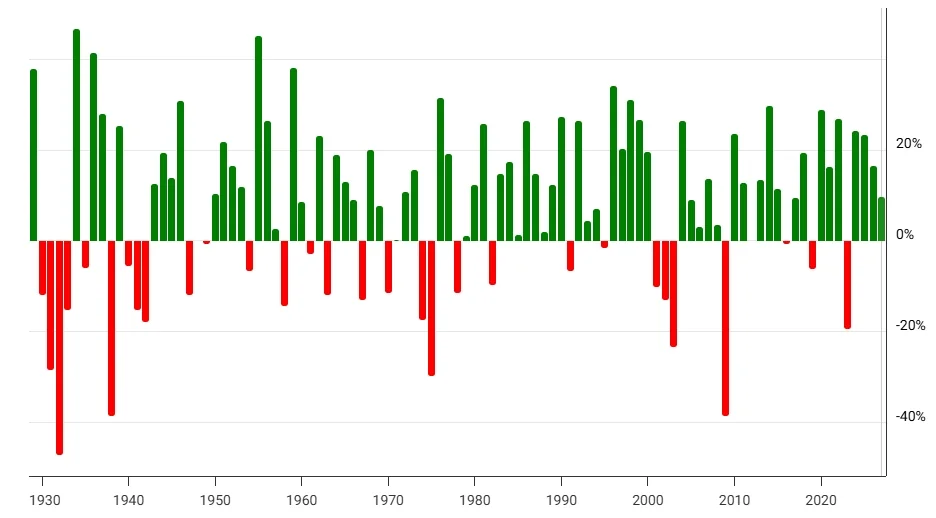
However, crypto remains a high-risk asset class. Morgan Stanley has estimated annualized crypto volatility near 55%, roughly four times the S&P 500. Bitcoin alone carries an annualized volatility of approximately 65.2%, though systematic rebalancing can reduce this to around 21.5% according to Amberdata’s institutional risk research. The goal of a long-term portfolio is to capture the upside while structurally managing this volatility.
02 The Core-Satellite Allocation Method
The core-satellite approach is the most widely recommended framework for constructing a crypto portfolio, used by both institutional investors and financial advisors. It divides your crypto holdings into two layers: a stable core of established assets and smaller satellite positions in higher-growth assets.
The core (60–70%) consists of Bitcoin and Ethereum. These two assets represent over 65% of total crypto market capitalization and have the deepest institutional adoption, including spot ETFs, qualified custodians, and robust derivatives markets. As of June 2026, the seven largest U.S.-listed Bitcoin ETFs held $92 billion in assets, led by BlackRock’s IBIT at $58.1 billion. VanEck’s research has identified a BTC 71.4% / ETH 28.6% split as the risk-adjusted optimum for a crypto-only portfolio, though in practice a range of 60–80% BTC and 20–40% ETH accommodates different risk tolerances.
The satellite (20–30%) includes large-cap altcoins with established use cases — payment networks, decentralized finance infrastructure, and layer-1 blockchain challengers. These positions carry higher beta, meaning they move more aggressively in both directions, but they also offer meaningful upside capture during bull markets.
The stablecoin buffer (10–15%) held in USDC or USDT serves as strategic dry powder. It is not idle cash — it earns 5–9% APY through DeFi lending protocols like Aave and Compound while remaining available to deploy during market crashes when assets trade 40–70% below their highs.
03 Exact Portfolio Breakdown by Risk Profile
Your allocation should match your risk tolerance, time horizon, and financial capacity to absorb losses. Below are three reference allocations adapted from institutional frameworks documented by XBTO, Fidelity Digital Assets, and Messari’s Crypto Theses 2026. These apply to the crypto sleeve of your portfolio — meaning how the crypto portion is divided, not your total net worth.
| Investor Profile | BTC | ETH | Large-Cap Alts | Speculative | Stablecoins |
|---|---|---|---|---|---|
| Conservative 3–5 year horizon, low risk tolerance | 55% | 20% | 10% | 0% | 15% |
| Balanced 5+ year horizon, moderate risk tolerance | 40% | 25% | 20% | 5% | 10% |
| Aggressive 10+ year horizon, high risk tolerance | 30% | 20% | 25% | 15% | 10% |
Important: The percentages above describe how your crypto allocation is divided, not how much of your total net worth should be in crypto. For total crypto exposure, most advisors recommend 5–10% of your overall investment portfolio. Conservative investors should stay at 1–5%, while aggressive investors with long time horizons may go up to 15–30%.
04 Which Cryptocurrencies Should You Hold for 3–5 Years?
For a 3–5 year horizon, the cryptocurrencies you hold should be chosen based on institutional adoption, network utility, liquidity, and verifiable on-chain revenue — not narrative or hype. Below is a breakdown by portfolio layer.
Layer 1: Core Assets — Bitcoin (BTC) and Ethereum (ETH)
Bitcoin and Ethereum remain the bedrock of any serious long-term portfolio, typically comprising 50–70% of total crypto holdings. Bitcoin continues to function as “digital gold,” with the top 100 Bitcoin treasuries now holding over 1.26 million BTC. As of August 29, 2026, Bitcoin trades at approximately $77,785 with a market capitalization of $1.58 trillion and a dominance of 59.5%. Ethereum serves as the programmable backbone of decentralized finance, sustained by its deflationary burn mechanism and the largest developer ecosystem in crypto, trading near $2,444 with a market cap of approximately $300 billion.
Layer 2: Satellite Assets — SOL, LINK, AVAX, BNB
These are established platforms with proven network effects and verifiable on-chain activity. Solana (SOL) surged 10.4% in the final week of August 2026 to trade near $104 after Charles Schwab announced it would add SOL alongside AVAX and LINK to its crypto platform. BNB trades near $705 with strong ecosystem utility. These assets offer higher growth potential than BTC and ETH while maintaining sufficient liquidity for institutional participation.
Layer 3: High-Risk Speculative — AI Tokens, DePIN, RWA
Allocate 0–15% to niche sectors with asymmetric upside potential. In 2026, AI-integrated wallets, decentralized physical infrastructure networks (DePIN), and real-world asset (RWA) tokenization are the prominent emerging themes. However, these positions must be sized as if they could go to zero. The collapse of the Humanity ($H) protocol on June 9, 2026 — where the token fell 90% due to a $31.3 million exploit — is a stark reminder of the volatility in smaller-cap tokens.
Position sizing rule: No single altcoin should exceed 5% of your total crypto allocation. No single high-risk speculative position should exceed 1–2%. A single position going to zero should be a manageable setback, not a defining portfolio event.
05 Dollar-Cost Averaging Strategy
Dollar-cost averaging (DCA) is the most effective entry strategy for crypto investing, especially in a volatile market. DCA means spreading your purchases over a set period rather than investing the full amount at once, which reduces timing risk — the risk of buying at a single price peak.
For core holdings like BTC and ETH, spread your purchases over 2–4 weeks. In a market environment where the Fear & Greed Index is below 35 (indicating fear), DCA eliminates timing risk entirely because you are buying across a range of prices. Many exchanges and platforms now offer automated DCA features that execute recurring buys on a schedule you set.
The mathematical advantage is straightforward: because crypto prices swing significantly even within a single week, buying in fixed-dollar increments means you automatically purchase more units when prices are low and fewer when prices are high. This brings your average cost per unit below the simple average of prices over the same period.
06 When and How to Rebalance Your Crypto Portfolio
Rebalancing means returning your portfolio to its target weights after market drift causes allocations to change. If BTC was targeted at 40% of your crypto portfolio but rallied to 60%, you trim the excess and reinvest in underweight assets. This is the mechanism that converts volatility from a risk into a return-enhancing force.
According to CoinTracker’s 2025 Annual Report, portfolios that rebalanced regularly outperformed passive holders by 8–12 percentage points per year on average. The key is choosing a rebalancing method that balances discipline with cost efficiency.
| Rebalancing Method | How It Works | Best For |
|---|---|---|
| Calendar (Quarterly) | Review and reset allocations every 3 months regardless of market conditions | Most long-term investors; eliminates emotional decisions |
| Threshold (Drift) | Trigger rebalance when any asset drifts ±10–15% from its target weight | Active investors who want to respond to market moves |
| Hybrid (Recommended) | Quarterly review plus immediate action when thresholds are breached | Investors managing 5+ positions; reflects how institutional managers operate |
Avoid rebalancing more than twice per month. Transaction fees (typically 0.1% per trade on major exchanges) plus capital gains obligations compound into a meaningful performance drag that offsets the benefit of tighter allocation control. For most individual investors, quarterly rebalancing offers the best trade-off between return enhancement, tax efficiency, and time commitment.
07 Risk Management Rules That Protect Long-Term Wealth
Risk management is what separates investors who build long-term wealth from those who get wiped out in a single bear market. The following rules are non-negotiable for a 3–5 year strategy.
- Cap total crypto exposure. Limit crypto to 5–10% of your total investment portfolio. If a 70% drawdown on your crypto allocation would force you to change how you live, your allocation is too large. Crypto can fall 70–80% in a bear market and stay there for 18 months.
- Hard position sizing caps. No single non-BTC asset should exceed 5% of your crypto portfolio. High-risk satellite positions should be capped at 1–2% each. Any single loss should sting, not break the portfolio.
- Maintain core concentration. Keep BTC + ETH combined above 60% of your crypto holdings. With BTC dominance at 59.5%, chasing unproven altcoins introduces asymmetric downside with no compensating edge.
- Keep a stablecoin buffer. Always hold 10–15% in USDC or USDT as dry powder. This converts “should I sell?” into “should I add?” — a categorically different and easier question when markets drop.
- Split custody. Keep core holdings between a hardware wallet (Ledger or Trezor) and a regulated exchange (Coinbase, Kraken). Exchange concentration is a real risk — do not let custody convenience become a portfolio vulnerability.
- Set predetermined exit conditions. Write down why you hold each asset and under what conditions you would sell. Condition-based exits (anchored to fundamentals) are more durable than price targets (anchored to market noise).
08 Adjusting Your Strategy for Market Cycles
Crypto markets move in cycles, and your portfolio should adapt without attempting to time exact tops and bottoms. The goal is to have rules that prevent euphoria from making decisions for you.
During fear (Fear & Greed Index below 35): Favor BTC and ETH. Use DCA rather than chasing rallies. Increase your stablecoin buffer by 5–10 percentage points above baseline. Quality assets usually move before speculative micro-caps in this phase.
During accumulation (Index 35–55): Gradually add selected altcoin exposure in sectors with real user activity, developer momentum, and fee generation. Layer-2 networks, DeFi, infrastructure, and RWA themes often attract capital during this stage.
During greed (Index above 65): Trim winners. If an altcoin grows from 5% to 22% of your crypto portfolio, that is not skill anymore — it is concentration risk. Rebalance into BTC, ETH, or stablecoins before the market does it for you. Reduce thinly traded altcoins and keep the core intact.
09 Common Mistakes That Destroy Long-Term Returns
- Over-allocating to crypto. Putting 25–50% of your net worth into crypto exposes you to catastrophic risk in a downturn. A 5% allocation that doubles is a 5% total portfolio gain; a 5% allocation that goes to zero is a 5% total portfolio loss. The asymmetry works in your favor only when sized correctly.
- Holding 30+ tokens. This does not diversify risk — it diversifies attention, which is worse. Most serious long-term holders cap at 5–10 positions. Beyond BTC and ETH, 2–3 high-conviction altcoin positions are enough.
- Never rebalancing. A portfolio that is not rebalanced will drift. If SOL doubles while BTC stays flat, SOL becomes 30% of a portfolio designed to hold 13%. The position is now oversized relative to your risk framework, even if you remain bullish.
- Averaging down without revalidating the thesis. If a position is falling, do not buy more simply because it is cheaper. Re-validate the investment thesis from scratch before adding.
- Chasing narratives instead of fundamentals. A token’s price rising is not evidence of utility. Demand verifiable on-chain revenue, real user activity, and protocol fees before allocating capital.
- Ignoring tax implications. Each rebalance may be a taxable event depending on your jurisdiction. Factor this into your rebalancing frequency — excessive trading erodes gains faster than minor allocation drift.
10 Frequently Asked Questions
What is the best crypto portfolio allocation for long-term wealth?
A core-satellite allocation of 60–70% in BTC and ETH as core holdings, 20–30% in large-cap altcoins like SOL and LINK, and 10–15% in stablecoins as dry powder is the most widely recommended structure for long-term wealth creation over a 3–5 year horizon. This framework is used by institutional investors and recommended by financial advisors because it balances stability with growth potential.
How much of my total portfolio should be in crypto?
Most financial advisors recommend limiting crypto to 5–10% of your total investment portfolio. Conservative investors should stay at 1–5%, while aggressive investors with long time horizons may go up to 15–30%. The key test: if a 70% drawdown on your crypto allocation would force you to change how you live, your allocation is too large.
How often should I rebalance my crypto portfolio?
Quarterly rebalancing is the sweet spot for most long-term investors. Combine it with threshold triggers: rebalance immediately if any asset drifts more than 10–15% from its target weight. Avoid rebalancing more than twice a month to minimize transaction costs and tax events. According to CoinTracker’s 2025 Annual Report, regularly rebalanced portfolios outperformed passive holders by 8–12 percentage points per year.
Is dollar-cost averaging better than lump sum investing in crypto?
Dollar-cost averaging (DCA) is generally better for crypto because it reduces timing risk in a highly volatile asset class. Spreading purchases over 2–4 weeks for core holdings like BTC and ETH eliminates the risk of buying at a single price peak. DCA also removes emotional decision-making from the entry process.
Which cryptocurrencies should I hold for 3–5 years?
For a 3–5 year horizon, hold a core of Bitcoin (BTC) and Ethereum (ETH), add large-cap altcoins with real use cases like Solana (SOL), Chainlink (LINK), and Avalanche (AVAX), and keep a small speculative allocation in emerging sectors like AI tokens or RWA tokens. No single altcoin should exceed 5% of your total crypto allocation. Focus on assets with verifiable on-chain revenue, institutional adoption, and proven network effects.
Should I use leverage for long-term crypto investing?
For long-term wealth building, avoid leverage entirely. Beginners should use zero leverage with no exceptions. Even intermediate investors should limit leverage to 2–3x and only on assets with open interest above $300 million (BTC, ETH, and SOL qualify as of 2026). Leverage amplifies losses and introduces liquidation risk that can wipe out a long-term portfolio during a flash crash.
Disclaimer: This article is for educational purposes only and does not constitute financial advice. Cryptocurrency investments are subject to high market risk. Always do your own research and consult a qualified financial advisor before making investment decisions. The author may hold positions in the assets mentioned.
Author: Md Adil · Last updated: August 30, 2026 · Sources: CoinGecko, CoinMarketCap, Fidelity Digital Assets, VanEck, Investments & Wealth Review (August 2026), Amberdata, CoinTracker 2025 Annual Report, Messari Crypto Theses 2026, Semrush AI Search Research (2025–2026).





Faydalı. AI Hotel Lobby: / ile turuncu kabin klibi deneyin. AI Hotel Lobby