

I still remember my first real paycheck.
It was 2012. I was 24, terrified, and holding a direct deposit slip that felt heavier than gold. $3,200 after taxes. In my head, I was already driving a Porsche. In reality, I had $900 in rent, a cracked iPhone 4, and a student loan bill that made me want to vomit.
I did what every 24-year-old does now: I opened Robinhood and bought $500 of a solar company because a guy on Twitter said it was “going to the moon.”
It went to zero.
That’s the story nobody tells you. The internet is obsessed with optimizing your portfolio. It’s all “Roth IRA vs. 401k,” “Small Cap Value vs. S&P 500,” “Crypto 10x gems.”
It’s all noise.
After 12+ years in this industry—watching clients lose millions in 2008, make billions in 2021, and panic-sell every May—I’ve learned a brutal truth:
Investing isn’t a math problem. It’s a psychology problem.
The difference between retiring at 55 and working until 75 isn’t your stock picks. It’s your behavior in your 20s, your discipline in your 30s, and your humility in your 40s.
This isn’t a list of tickers. This is the playbook that actually works.
The 20s: The Decade of “Who Cares?” (And Why It’s Your Superpower)
If you’re in your 20s, you have one advantage that no millionaire on Earth can buy:
You are allowed to be poor.
I look at my 26-year-old self and want to shake him. I was so stressed about not having money that I missed the magic of having time.
In your 20s, compound interest is a magic trick. In your 40s, it’s just math. And magic is way more fun.
The Only Goal: Don’t Blow It
Most finance bros tell you to “hustle and invest aggressively.” I’m telling you to chill.
Your job in your 20s isn’t to get rich. It’s to stay in the game.
I’ve seen too many kids go all-in on tech stocks in 2021, double their money, feel like gods, and then lose it all in 2022 because they had no safety net. They quit the game before it really started.
What Actually Works Here:
- The “Boring” Roth IRA: Max it out if you can. If not, $100/month. It grows tax-free forever. That’s it.
- S&P 500 or Total Market: That’s the meal. Everything else is just seasoning. You don’t need 15 different ETFs.
- The “Oops” Fund: Before you invest a dime, save $2,000. When your car breaks down (it will), you won’t have to sell your investments at a loss.
The Trap: Thinking $100 doesn’t matter.
Let me show you why that’s a lie.
Table 1: The Brutal Cost of Waiting (2025 Projections)
Assumes an 8% average annual return (S&P 500 historical avg).
| Investment Start Age | Monthly Contribution | Total Invested by Age 67 | Estimated Portfolio Value | The “Lazy Tax” (Cost of Waiting) |
|---|---|---|---|---|
| 25 | $500 | $252,000 | $1,850,000 | $0 |
| 30 | $500 | $222,000 | $1,220,000 | -$630,000 |
| 35 | $500 | $192,000 | $795,000 | -$1,055,000 |
| 40 | $500 | $162,000 | $505,000 | -$1,345,000 |
Source: Author calculations based on historical market averages. Inflation not adjusted.
See that? Waiting 10 years (25 to 35) didn’t cost you $60k in contributions. It cost you over a million dollars.
My advice to 20-somethings:
Date the market, don’t marry it. Automate $200/month into VTI or VOO. Go live your life. Fall in love. Travel. Eat ramen. Just don’t touch the money.
The 30s: The Golden Handcuffs (And How to Break Them)
Welcome to the danger zone.
This is where people get rich on paper and poor in reality.
You’re 32. You just got promoted. You’re making $120k now. You have a spouse, a toddler, and a mortgage that scares you.
This is the decade of Lifestyle Creep.
I call it the “Golden Handcuffs.” You earn more, so you spend more. The gap between your income and your savings stays the same. You’re running faster just to stay in place.
I had a client, “Dave.” At 30, he was saving 10%. At 35, he was making double but saving 8%. Why? A new BMW. A bigger house. Private school.
He optimized his life for today and sacrificed his tomorrow.
The Math of “More”
In your 30s, you can’t rely on “time” anymore. You have to rely on savings rate.
This is the only decade where you have high earning power AND enough time left for compounding to save you.
What Actually Works Here:
- Kill the “Good” Debt: That 4% mortgage feels fine. But in a 5% bond yield world, paying off debt is a guaranteed return. Psychology > Math.
- Backdoor Roth IRA: You make too much for a normal one? Good. That means you’re winning. Use the backdoor.
- The 50/30/20 Rule is Dead: You need a 20/40/40 rule. 20% taxes, 40% lifestyle, 40% wealth building. It feels tight. It’s supposed to.
Table 2: The Lifestyle Creep Calculator
Income: $150,000/year. 30-year timeline.
| Scenario | Savings Rate | Annual Invest | 30-Year Value (8% return) | Monthly Retirement Income (4% rule) |
|---|---|---|---|---|
| The Optimizer | 10% | $15,000 | $1.7 Million | $5,600 |
| The Balanced | 20% | $30,000 | $3.4 Million | $11,300 |
| The Hustler | 35% | $52,500 | $6.0 Million | $20,000 |
An extra $22k/year in savings doubles your retirement income. Think about that next time you lease a luxury car.
My advice to 30-somethings:
Your 30s are a war against your ego. Your friends are buying boats. You buy index funds. It feels like you’re losing. You’re not. You’re buying freedom.
The 40s: The “Oh Sh*t” Decade (And Why Panic is Expensive)
I love my 40-something clients. They’re serious.
But they’re also terrified.
The finish line is visible. You realize Social Security might not be enough. You look at your statement and think: “Is this it?”
This is the decade of Reckoning.
The biggest mistake I see? Risk Paralysis.
Half of them go 100% cash because they’re scared of a crash. The other half go 100% AI stocks because they’re desperate to catch up.
Both end up poor.
In your 40s, you don’t have 30 years to recover from a 20% drop. But you do have 20 years. That’s still a lifetime.
The Shift: From Growth to Growth-and-Income
You need to dial back the volatility. Not because you’re old, but because you’re rich. You have more to lose.
If you have $50k, a 50% drop is annoying. If you have $500k, a 50% drop gives you an ulcer.
What Actually Works Here:
- Catch-Up Contributions: The government lets you put more into 401ks. Do it. It’s free money.
- Bonds are Back: Remember when bonds were stupid? They’re not stupid anymore. A 60/40 portfolio (60% stocks, 40% bonds) isn’t boring; it’s a shock absorber.
- Real Estate (If you’re a nerd): Not a REIT. A rental property. Forced appreciation + cash flow. It’s a job, not an investment. Only do it if you love spreadsheets.
Table 3: The De-Risking Roadmap (2026-2030)
How your portfolio should evolve as you age. (The “Glide Path”)
| Age Decade | Stock Allocation | Bond/Fixed Income | Alternative/Cash | Goal |
|---|---|---|---|---|
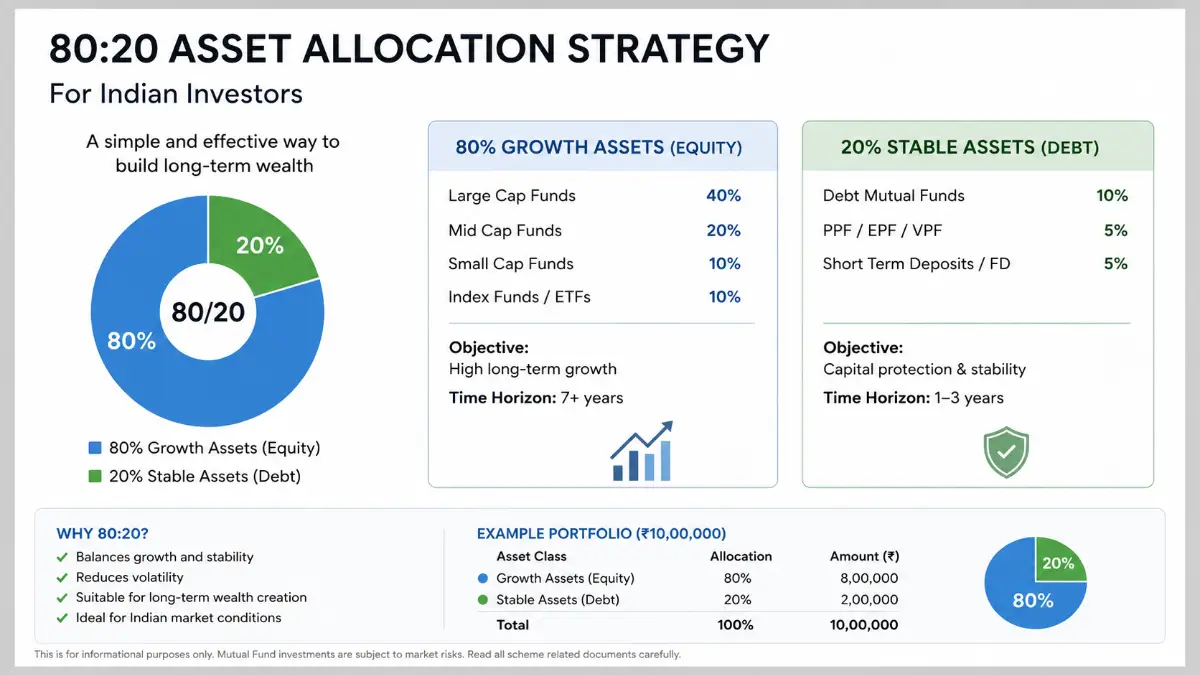
| 20s-30s | 80% – 90% | 10% – 20% | 0% | Max Growth |
| Early 40s (40-45) | 70% | 25% | 5% | Growth + Stability |
| Late 40s (46-49) | 60% | 35% | 5% | Preservation Focus |
| Approaching 50 | 50% – 55% | 40% – 45% | 5% | Safe Landing |
This isn’t financial advice, it’s historical convention. Adjust for your risk tolerance.
My advice to 40-somethings:
Stop trying to 2x your money. Try to 1.5x it. Slow and steady wins this race. If you have $1M at 45, you are literally unstoppable. You don’t need to gamble.
The 2026-2030 Outlook: What I’m Telling My Clients Now
Let’s talk about the future. Not the crypto-bro future. The real future.
I’ve been reading the McKinsey and BlackRock reports so you don’t have to. Here is what the next 5 years actually look like.
1. The “Higher for Longer” Hangover
Interest rates aren’t going back to 0%. Get used to 4-5% returns on “safe” money.
The Play: Bonds are finally cool again. CDs, Treasuries. Lock in yields now.
2. The AI Productivity Boom (is real)
I was a skeptic. I’m not anymore. AI isn’t just hype; it’s making companies profitable with fewer people.
The Play: Don’t buy “AI stocks.” Buy Quality. Companies with wide moats using AI to cut costs. (Think Microsoft, not some $2M cap chatbot app).
3. The Demographic Cliff
By 2030, the last Boomer retires. Who is buying all the houses? Who is buying the stocks?
The Play: International. The US is old. India, Vietnam, and parts of Africa are young. You need 20-30% international exposure. It feels wrong, but it’s right.
Table 4: 2026-2030 Asset Class Projections
My personal estimates. Conservative but trend-aligned.
| Asset Class | Expected Annual Return (2026-2030) | Risk Level (1-10) | Role in Portfolio |
|---|---|---|---|
| US Large Cap Tech | 9% – 12% | 8 | The Engine |
| US Small Cap Value | 10% – 14% | 9 | The Turbo (Volatile!) |
| International Dev. | 6% – 8% | 7 | Diversifier |
| Emerging Markets | 8% – 11% | 9 | High Risk/Reward |
| Bonds / Treasuries | 4% – 5% | 2 | The Brakes |
| Real Estate (REITs) | 5% – 7% | 6 | Inflation Hedge |
| Cash / CDs | 4% – 5% | 1 | Dry Powder |
FAQ: The Questions I Get Asked in My Office
“Is real estate dead?”
No, but easy money is. You can’t buy a shack and retire anymore. Real estate now is a blue-collar job. It’s plumbing and tenants. If you want passive income, buy a REIT. If you want a second income, buy a duplex.
“I have $50k in debt and $20k in savings. What do I do?”
The “Fuck You” Fund first. Pay off the debt emotionally, but mathematically, keep the cash. If you pay off the debt and your car breaks down, you’re putting it back on a credit card. Save the $20k first. Then attack the debt like a rabid dog.
“The market is at an all-time high. Should I wait?”
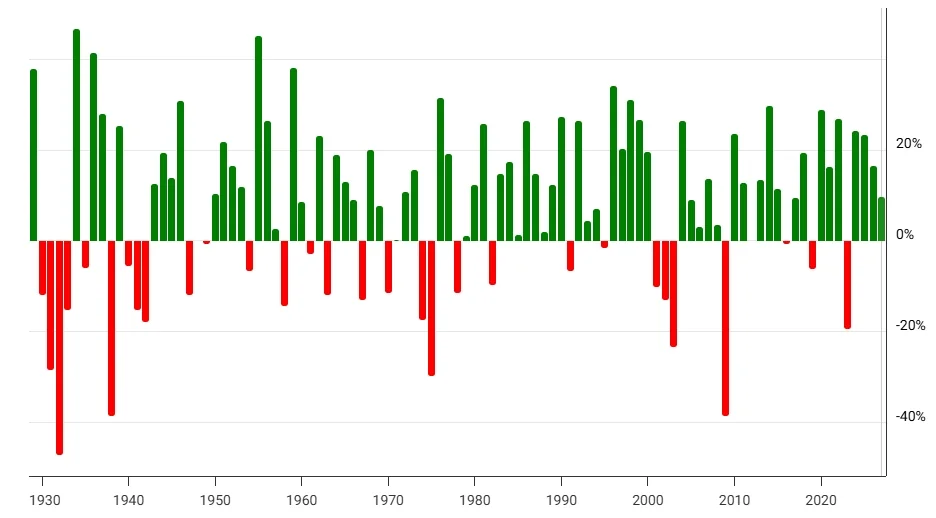
This is the most expensive question in finance. “Waiting for a dip” has cost people more money than any crash. Time IN the market > Timing the market. If you have money, put it in. If you’re scared, put in 50%. Just move.
“Should I help my kids with college or my retirement?”
Put your own oxygen mask on first. You can get loans for college. You cannot get loans for retirement. Your kids have 40 years to make money. You have 20. Do the math.
The Final Word
Investing isn’t about being smart.
The smartest guy I ever met was a physics PhD who lost 80% of his net worth in 2000 because he thought he could outsmart the internet bubble.
Investing is about being boring consistently.
- 20s: Show up.
- 30s: Don’t spend it all.
- 40s: Don’t panic.
That’s it. That’s the secret.
The world wants to sell you complexity because complexity is profitable. The truth is simple, and it hasn’t changed in 100 years.








1 thought on “Investing in Your 20s, 30s & 40s: What Actually Works?”