

1. The Macro-Economic Imperative for Gold Allocation
In the current 2026 market cycle, gold has shifted from a dormant “safe haven” to an active strategic imperative for institutional portfolios. This resurgence is not merely a reaction to sentiment but a quantitative response to a deteriorating “Efficiency Frontier” within domestic equities. The convergence of stagnant corporate earnings—with “India Inc” net profits growing at a meager 3.6%, the slowest pace in 17 quarters—and persistent foreign institutional investor (FII) outflows has fundamentally altered the risk-reward calculus for multi-asset managers.
Table of Contents
Macro-Drivers of the 2025-2026 Gold Rally
- Stagnant Corporate Profitability: The 3.6% growth in net profits reflects a systemic slowdown, forcing capital out of growth-oriented equities and into defensive hedges.
- Historic Currency Weakness: The Indian Rupee reached a terminal low of 87.55 against the US Dollar in 2025. As gold is a dollar-denominated asset, this depreciation provides a dual return: capital appreciation in bullion plus currency-related gains.
- Monetary Policy Pivot: With US Federal Reserve interest rate expectations leaning toward cuts, the opportunity cost of holding non-yielding gold has plummeted, making it a highly competitive alternative to fixed-income instruments.
- Institutional Supply Vacuum: The record net inflows into Gold ETFs—reaching ₹3,751 crore in January 2025—were catalyzed by the sudden removal of alternative paper-gold avenues.
These factors have elevated gold to a critical systemic hedge. For the wealth manager, the “So What?” is clear: gold is now the primary tool for mitigating tail risk in an environment defined by domestic earnings fatigue and global currency volatility.
2. The Structural Pivot: Digital Gold vs. Legacy Instruments
The professionalization of gold as an asset class reached its zenith in early 2025. Historically, Sovereign Gold Bonds (SGBs) were the primary competitor to ETFs. However, the Union Budget 2025 decision to cancel new SGB issuances—driven by the government’s rising cost of borrowing as domestic gold prices surged—has permanently redirected institutional flows toward exchange-traded instruments.
Comparative Framework: Gold ETFs vs. Sovereign Gold Bonds (SGBs)
| Metric | Gold ETFs | Sovereign Gold Bonds (SGBs) |
| Liquidity | High; T+0 trading on NSE/BSE. | Low; thin secondary market volume. |
| Trading Flexibility | Intraday execution; high agility. | Fixed issuance/maturity cycles. |
| Holding Period | No lock-in; tactical rebalancing. | 8-year maturity; early exit penalty. |
| Interest Income | Zero. | 2.5% per annum (taxable). |
| Management Layer | Professional AMC oversight. | Government-backed; no management fee. |
The Digital Advantage
- Logistical Security: Elimination of the “Theft-Storage-Insurance” cost cycle associated with physical bullion.
- Purity Transparency: Mandated backing by 99.5% pure physical gold held in regulated, insured vaults.
- Operational Agility: ETFs provide the necessary liquidity to execute large-scale portfolio rebalancing without the slippage or making-charge overheads of physical coins or jewelry.
3. Quantitative Performance Benchmarking: The Top Five Indian Gold ETFs
For a quantitative strategist, absolute returns are secondary to tracking efficiency. While bullion prices move in unison, the internal efficiency of an ETF determines the net alpha delivered to the client.
Performance Matrix: Leading Indian Gold ETFs (Data as of Jan 2026)
| Fund Name | 1-Year Return (%) | 5-Year CAGR (%) | Tracking Error (%) |
| UTI Gold ETF | 31.88% | 20.09% | 0.11% |
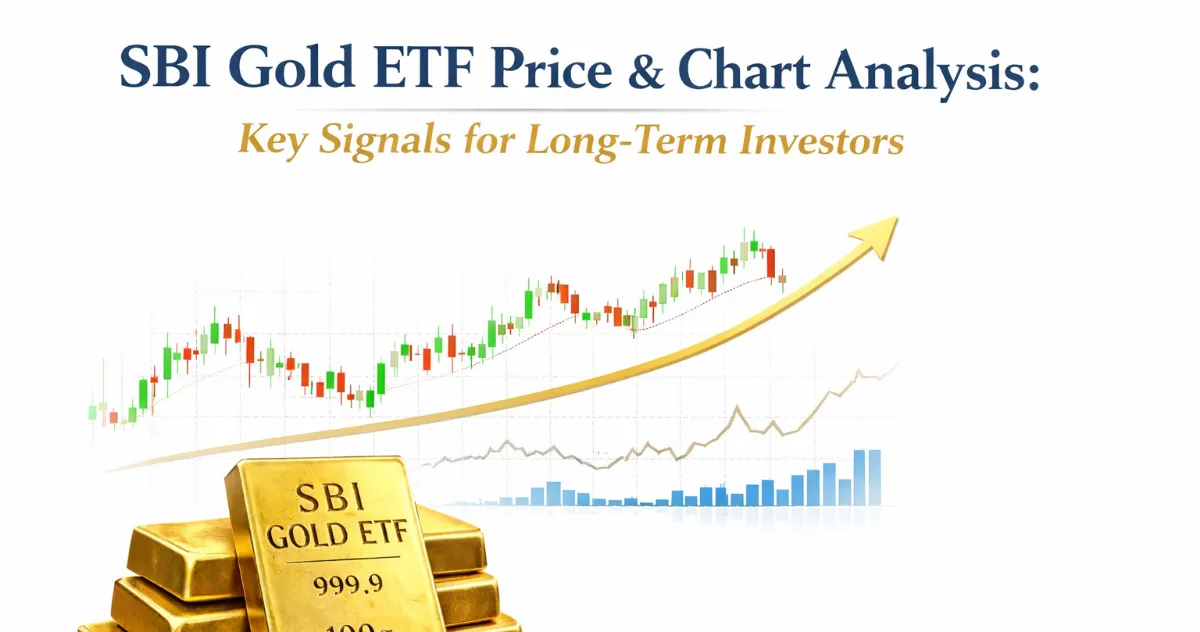
| SBI Gold ETF | 31.50% | 19.87% | 0.23% |
| Kotak Gold ETF | 31.47% | 20.79% | 0.27% |
| Nippon India Gold BeES | 31.31% | 18.00% | 0.25% |
| HDFC Gold ETF | 30.89% | 19.96% | 0.28% |
Note: 1-Year returns reflect the surge in bullion prices throughout 2025.
Tracking Accuracy Analysis Tracking error is the definitive metric for evaluating fund management quality. UTI Gold ETF and SBI Gold ETF demonstrate “Best-in-Class” tracking accuracy, significantly outperforming the category average. A lower tracking error indicates that the fund’s internal cash-drag and management fees are optimized, ensuring the investor captures the maximum percentage of the underlying spot gold movement.
4. Risk Assessment and Volatility Hedging Metrics
Standard Deviation and Beta are the primary tools for assessing gold’s effectiveness as a portfolio diversifier. In the current high-volatility regime, understanding the dispersion of returns is essential for managing institutional drawdowns.
Risk-Profile Categorization
- Conservative/Stability Choice (HDFC Gold ETF): With a Standard Deviation of 5.04, HDFC provides the most stable path for capital preservation.
- Aggressive/High-Variance Choice (SBI Gold ETF): Demonstrates a higher Standard Deviation of 9.98. Strategists should note that this elevated volatility is often a byproduct of internal management variance or tracking differences rather than the underlying asset itself.
- Balanced Profiles (ICICI Pru & Kotak): These funds maintain moderate risk levels (Standard Deviations of 6.67 to 6.81), offering a mid-curve risk-reward profile.
Analysis using Pearson’s Correlation Coefficient (0.383) confirms that while the asset class is fundamentally non-correlated to equities, the cost of the vehicle (expense ratio) has a tangible impact on risk-adjusted returns. Gold’s “Negative Correlation” principle remains the primary defense against “tail risk” during geopolitical shocks or systemic downturns like the 17-quarter growth lull currently facing the Indian economy.
5. Institutional Execution: AUM, Liquidity, and Cost Structures
For institutional desks, “Impact Cost”—the slippage between a trade’s decision price and execution price—is often more significant than the headline expense ratio. Tax efficiency is moot if entry/exit slippage exceeds the 12.5% tax benefit.
Institutional Execution Metrics (January 2026)
| Fund Name | Total AUM (₹ Cr) | Avg. Daily Volume | Expense Ratio (Direct) |
| Nippon Gold BeES | 55,124 | 1,750,000+ | 0.25% |
| ICICI Pru Gold ETF | 24,586 | 133,000+ | 0.28% |
| SBI Gold ETF | 24,194 | 121,000+ | 0.35% |
| HDFC Gold ETF | 22,985 | 132,000+ | 0.30% |
| Kotak Gold ETF | 15,595 | 214,000+ | 0.32% |
Nippon India retains undisputed dominance in liquidity, minimizing impact costs for large-scale institutional blocks. Crucially, Nippon also provides the most competitive cost structure at 0.25%, challenging the historical trade-off between size and expense.
6. The 2025-2026 Regulatory and Taxation Framework
The 2025 standardized tax regime has significantly simplified multi-asset portfolio planning by treating Gold ETFs as a distinct, transparent asset class.
- The 12-Month Threshold: The standardized holding period for Long-Term Capital Gains (LTCG) is now 12 months, down from the previous 36-month requirement for debt-like treatment.
- LTCG Rate: Long-term gains are taxed at a flat 12.5% without indexation benefits, making it highly efficient for multi-year holding strategies.
- STCG Rate: Holdings under 12 months are taxed at the investor’s applicable income tax slab.
- Transparency Mandate: Regulators now require daily disclosure of bullion holdings and strict adherence to the 99.5% purity standard, mitigating counterparty risks and ensuring the ETF remains a “true-to-label” gold instrument.
7. Strategic Allocation Recommendations for Wealth Managers
As of Q1 2026, the data supports three distinct allocation strategies based on investor persona and quantitative requirements:
- For Capital Preservation: Recommend HDFC Gold ETF or Nippon Gold BeES. These funds offer the lowest standard deviation (5.04) and high stability, essential for protecting the portfolio core.
- For High-Volume Institutional Trading: Nippon India ETF Gold BeES is the mandatory choice. Its ₹55,124 Cr AUM and 1.7M+ daily unit volume ensure that large tactical entries do not suffer from liquidity-induced impact costs.
- For Tracking Accuracy and Cost-Optimization: UTI Gold ETF (for its 0.11% tracking error) and Nippon Gold BeES (for its 0.25% expense ratio) represent the pinnacle of fund efficiency.
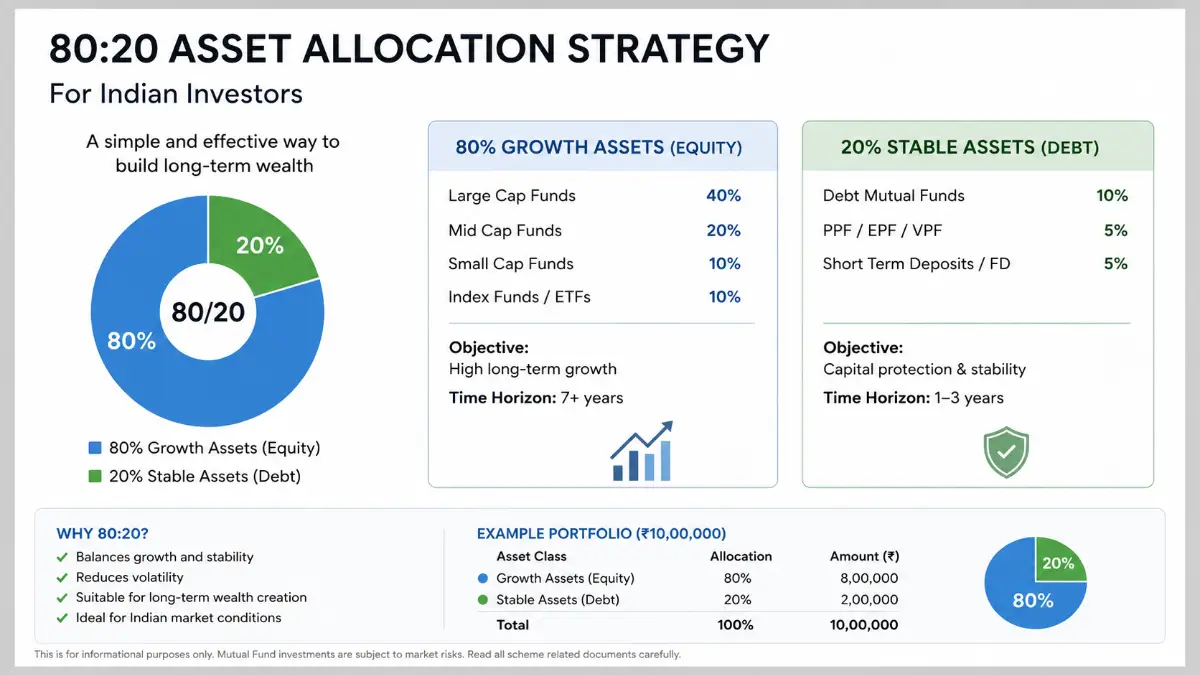
Strategic Summary: Wealth managers should limit gold allocation to 5-10% of the total portfolio. This range maximizes diversification benefits, buffers the portfolio against the current Rupee volatility at 87.55, and serves as the essential “anchor” for a modern Indian diversified portfolio in the post-SGB era.







2 thoughts on “Strategic Evaluation of Indian Gold ETFs: A Wealth Manager’s Guide to Volatility Hedging”